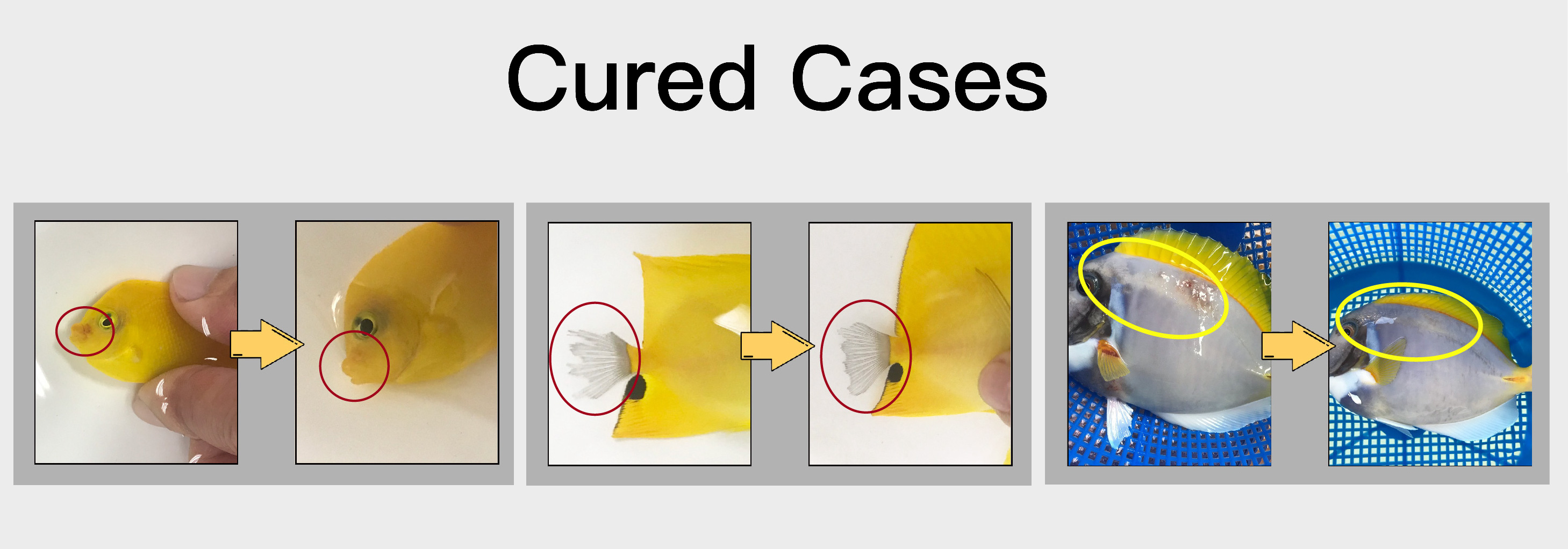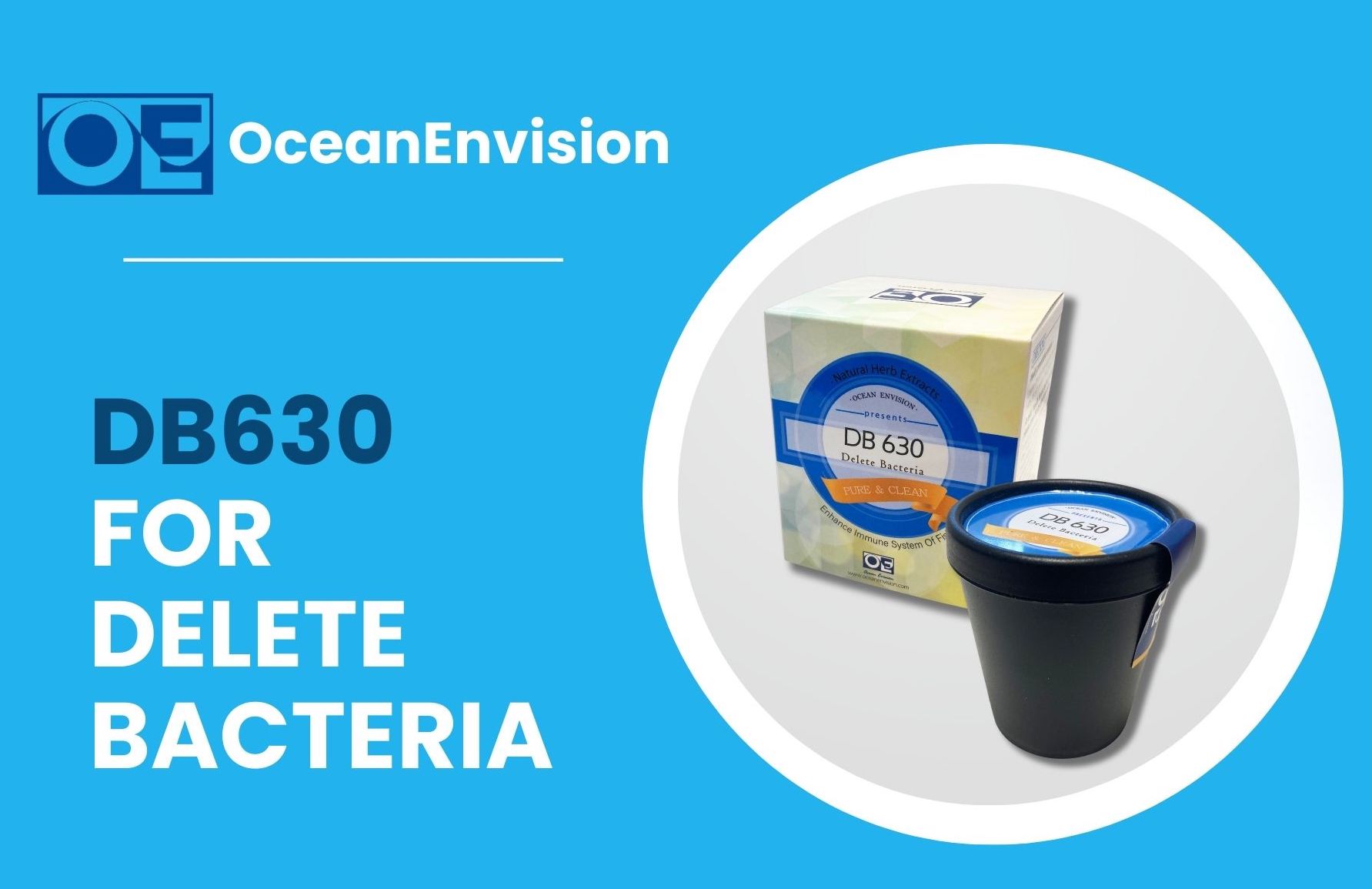
DB 630
In every aquarium there are potential disease-causing organisms, including species of fungus and bacteria. OE Lab. finds out some specific herb extracts to enhance immune system of fish. DB 630 keeps these disease organisms at an acceptable level to prevent disease outbreaks in your aquarium. Use DB 630 when adding fish to a new or existing aquarium, weekly as a preventative measure, if water quality problems are found or if your fish appear to be ‘off color’ but have no obvious symptoms.
BACTERIAL DISEASES IN MARINE AQUARIUM FISH
Healthy fish have a strong, natural resistance to bacteria and can usually
fight it off on their own, but weak, sick and/or stressed fish can be very susceptible to
this illness. The tiny open pores of the lateral line or open wounds are most often the
point of entry for the onset of internal infections, but the soft tissues of the gills
are also a prime entry point. If conditions are poor enough, the bacteria can bloom and
overrun even the healthiest of fish. White cloudy water with the presence of sores on
the fish can be signs of this problem. In many cases the fish has been cured of the parasite,
but the resultant infection from bacteria entering the fish's body via the break in the skin
has caused death.
Diagnosing bacterial diseases and why they occur is not always a simple, straight forward task.
Bacterial infections can stem from many causes, even combinations of contributing causes, and
can be topical (external - i.e. fin & tail rot and ulcer diseases), systemic (internal), or both.
The common signs can be one or a combination of the following:
1.Reddened and frayed fins, or red streaks through the fins. Red fins are often a sign of
"ammonia burn", which can be caused by poor packing procedures during shipping.
2.Disintegration of the fins, i.e fin and tail rot.
3.Redness around the area of the lateral line, often seen as streaks or blotches.
Open sores on the sides of the body and near the fins.
4.Others: Bloody scales at the base of the fins/ Rapid breathing./ A gray film over
bulging eyes (Pop Eye)./ Listlessness or lethargy./ Loss of appetite./ Abdominal swelling or bloating. This is usually a sign of a bladder infection, often a common problem with Wrasses that burrow in the substrate.
Bacterial diseases usually do not kill fish in a couple of days, especially larger ones,
but more over a one to two week period. However, there are some viral strains that may do so.
In any case, the prompt isolation of infected fish and treatment with an antibiotic in a
quarantine tank is important. Even minor topical infections can progress quickly, and once
the disease is in the systemic stage it affects the internal organs. The fish stops eating,
the respiration rate increases and the fish eventually lay on the bottom and dies.
However, if the environmental conditions in the aquarium are poor enough, it can severely
effect all of the fish. If this is the case it is best to perform a major water change,
treat all of the fish in a quarantine tank and give the aquarium a major cleaning overhaul.
This, as well as adding a UV sterilizer can sometimes help to prevent the perpetuation or
re-occurrence of the same problem in the future. Many bacteria are naturally resistant to
specific drugs, so using the proper type of antibiotic is of the utmost importance. For
example, gram-positive bacteria are often unaffected by tetracycline and streptomycin,
while gram-negative bacteria may be unaffected by ampicillin, penicillin, erythromycin
and sulfa drugs. Some bacteria may also be unaffected by the usual dose, but are susceptible
to a higher dose. Overall, the best method for treating bacterial infections is orally rather
than topically (treating the water), or using a combination of both. Oral feeding can be
accomplished by mixing an orally expect-able antibiotic into some highly palatable blended
frozen food.