Angelfish
Marine angelfish are perciform fish of the family Pomacanthidae. They are found on shallow reefs in the tropical Atlantic, Indian, and mostly western Pacific Oceans. The family contains seven genera and about 86 species. Many species of marine angelfishes have streamer-like extensions of the soft dorsal and anal fins. The fish have small mouths, relatively large pectoral fins, and rounded to lunate tail fins.

BLUESTRIPED ANGELFISH
The Bluestriped Angelfish(Holacanthus septentrionalis) is known from coastal rocky and coral reefs, to depths of 50m (163ft), where it occurs singly and in pairs and may be observed feeding on sponges and tunicates. This species is well suited to peaceful established aquaria with plenty of living rock. ........
Read more
BLUESPOTTED ANGELFISH
The secretive Bluespotted Angelfish (Chaetodontoplus caeruleopunctatus)is a relatively small species which is suited to peaceful established aquaria with plenty of living rock. Angelfish from the Chaetodontoplus genus are not seen in the trade all that regularly, and many species are highly prized........
Read more
BLACK VELVET ANGELFISH
The Black Velvet Angelfish (Chaetodontoplus melanosoma)is known from coastal reefs and drop-offs that are exposed to strong tidal currents, where they occur singly or in pairs, feeding on sponges and tunicates. Juveniles are often observed on deeper rubble slopes with rich invertebrate growth........
Read more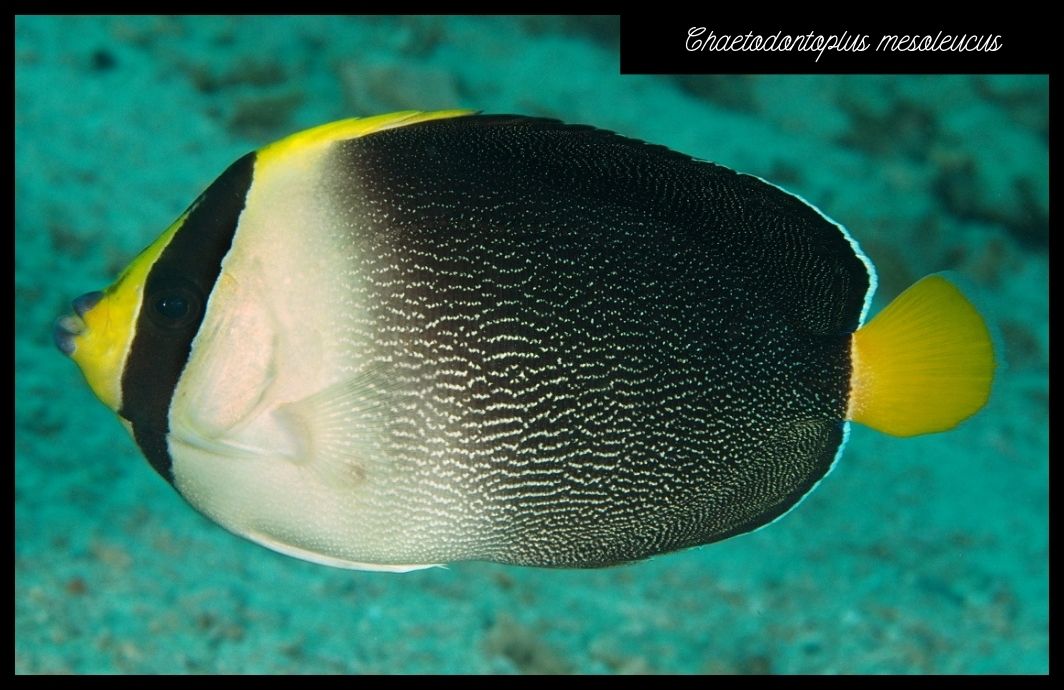
VERMICULATED ANGELFISH
The Vermiculated Angelfish's(Chaetodontoplus mesoleucus ) body is white behind the eye, gradually changing to dark grey posteriorly. The snout is yellow and a broad black band passes through the eye. The caudal fin is grey-blue or yellow.The species inhabits inner coral reefs and lagoons at depths ........
Read more